Stroke Rates in South London: Three Decades of Change
Key Findings from New Research
A major study tracking stroke cases in South London over 28 years has revealed important changes in how often strokes occur in our community. The research, conducted by King's College London and local NHS partners, provides crucial insights for public health planning.
What Did We Do?
Research teams monitored stroke cases across 27 wards of South London between 1995 and 2022, covering a population of nearly 400,000 people. The study tracked first-time strokes, providing a clear picture of how stroke rates have changed over time.
Positive Overall Trend
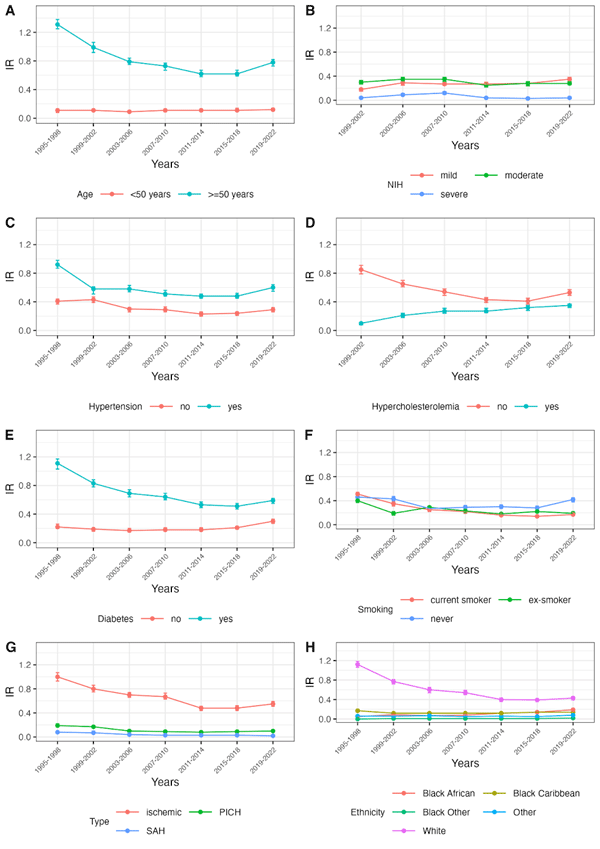
The overall trend shows that stroke rates have decreased significantly since the mid-1990s:
- In 1995-1998, about 1.37 people per 1,000 experienced their first stroke
- By 2015-2018, this had fallen to 0.82 people per 1,000.
Looking more closely at the downwards trend:
- The decline was seen across ethnic groups but was particularly evident in the White group (Figure 1H)
This decline suggests that improvements in public health, medical care, and lifestyle changes have helped reduce stroke risk in our community.
Recent Concerns
However, the study identified a concerning trend in recent years:
- Between 2019-2022, stroke rates increased slightly to 0.92 per 1,000 people
- This reversal of the long-term downward trend requires attention from health services.
Why This Research Matters
This research helps us understand:
- How our community's health is changing over time
- Where we need to focus healthcare resources
- Which public health strategies are working and which need adjustment
Implications for healthcare planning, commissioning and policy
The findings suggest we need:
- Continued investment in stroke prevention programs
- Special attention to what's driving the recent increase in stroke rates
- Targeted public health initiatives to address emerging risk factors
About the Research
This study represents one of the longest-running stroke monitoring programs in a diverse urban population. It was conducted by researchers from King's College London, working with the NHS and with support from the National Institute for Health and Care Research.
For more information about reducing your stroke risk or local stroke services, please contact your GP or local health authority.